Fine-Tuned Frequency Control for Live and Studio Audio
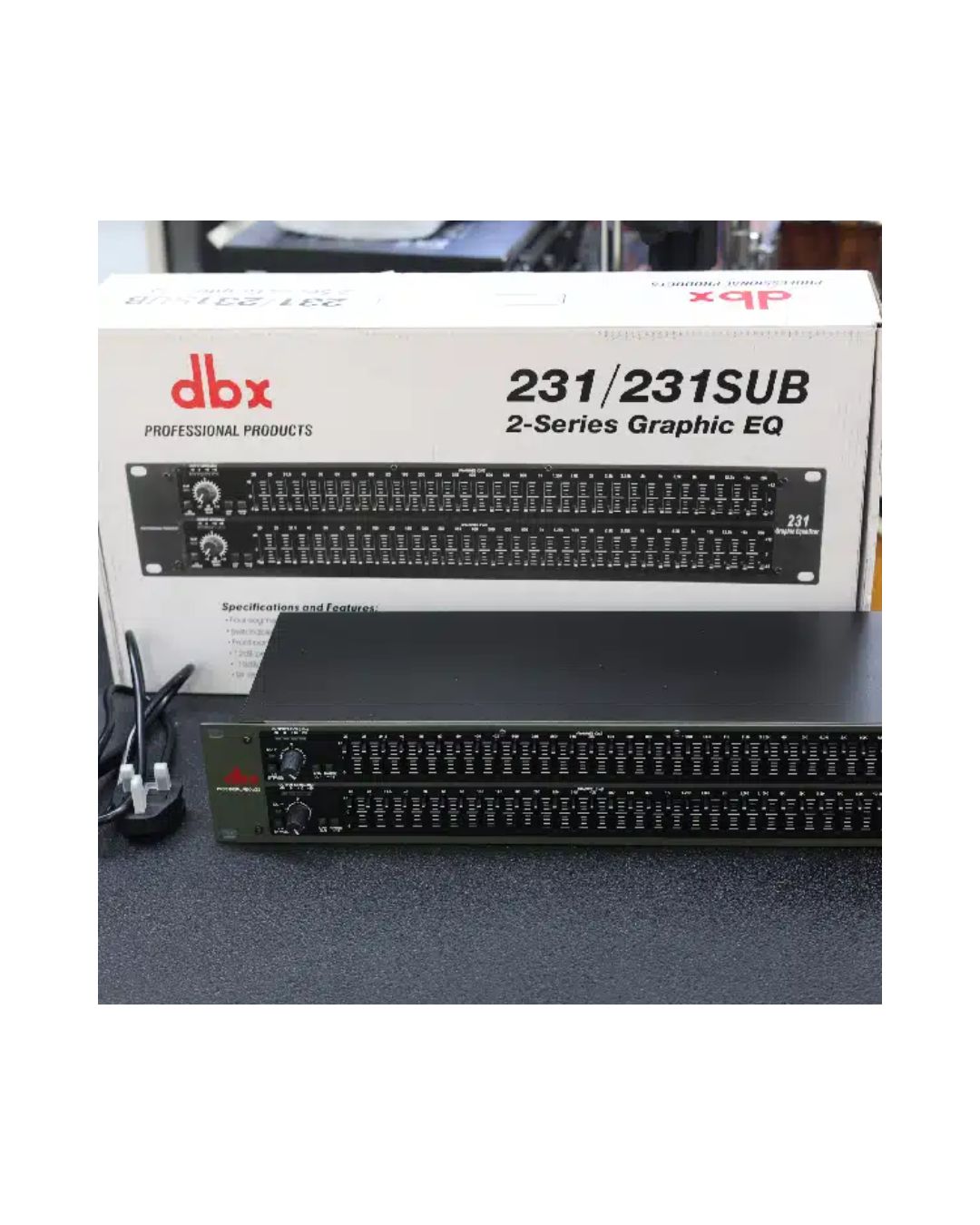
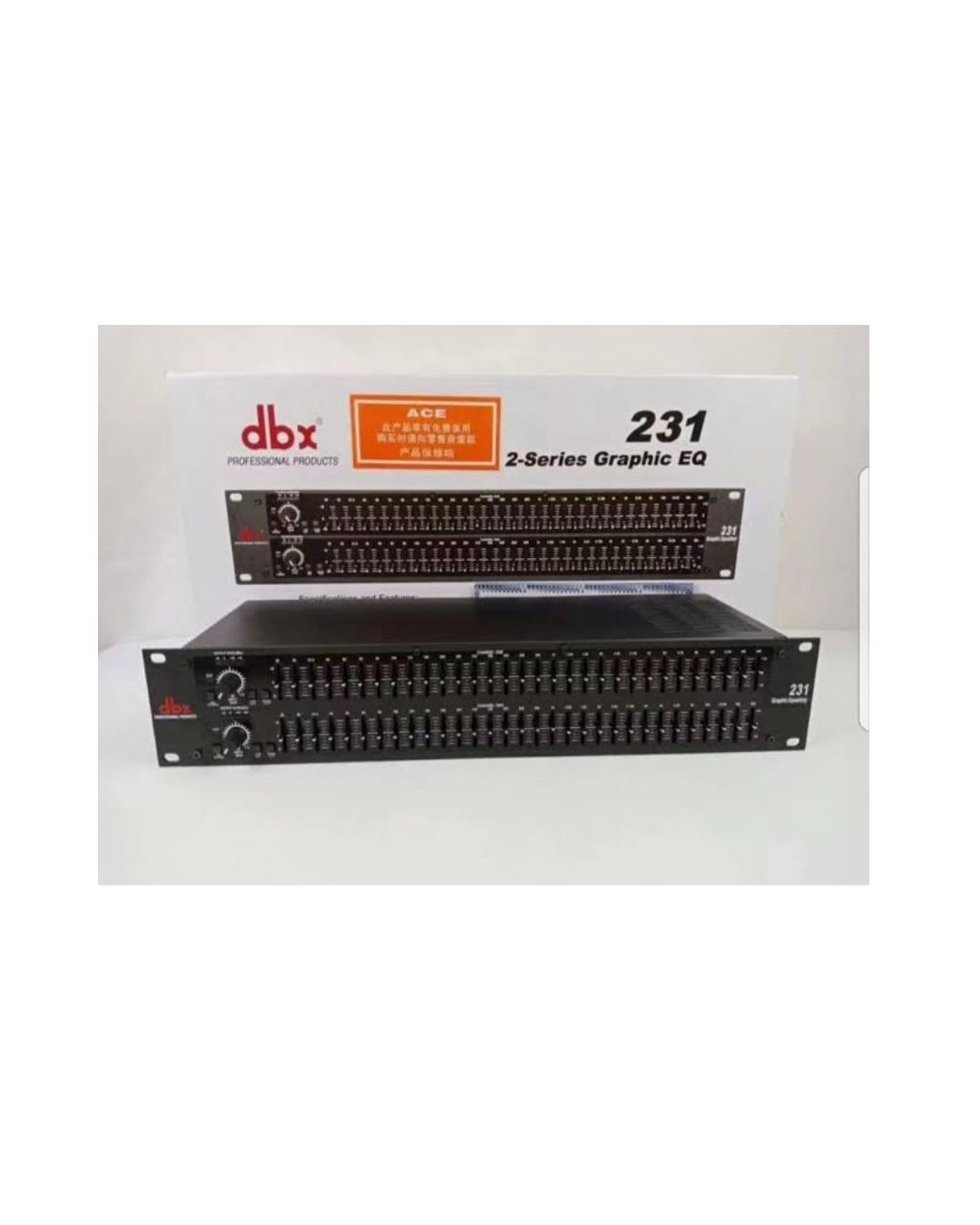
The DBX 231/231SUB 2 Series Graphic Equalizer gives audio engineers, sound technicians, and worship teams detailed control over their sound spectrum. Featuring two independent channels with 31 bands of 1/3-octave constant-Q equalization, this unit allows targeted adjustments across ISO standard frequencies to tame room resonances, eliminate feedback, and polish overall mix clarity.
Key Features and Benefits
Dual 31-Band 1/3-Octave Equalization: Independent 31-band fader control per channel spaced at ISO standard frequencies for comprehensive spectral shaping.
Precision Constant-Q Filters: Maintains narrow filter bandwidth regardless of boost or cut depth, preventing adjacent frequency interaction.
Selectable Boost/Cut Range: Toggle between ±6 dB for gentle, transparent studio adjustments and ±12 dB for aggressive live sound corrections.
Switchable Low-Cut Filter: Built-in 40 Hz / 50 Hz high-pass filter removes unwanted stage rumble, microphone plosives, and handling noise.
Power-Off Hardwire Bypass: Features a power-off relay bypass with a 2-second power-up delay to shield speakers and amplifiers from turn-on pops and power surges.
4-Segment LED Output Metering: Visual LED ladder displays provide instant feedback on output levels to prevent signal clipping.
Rugged Steel Construction: Housed in an all-steel 2U rack-mountable chassis designed for the rigors of mobile gigging and permanent installations.
Technical Specifications
| Specification | Detail |
| Product Name | DBX 231/231SUB 2 Series Graphic Equalizer |
| Channels | 2 (Dual Channel) |
| Bands Per Channel | 31 Bands (1/3-Octave ISO Center Frequencies) |
| Filter Type | Constant-Q (3% Center Frequency Accuracy) |
| Boost / Cut Range | Selectable ±6 dB or ±12 dB |
| Frequency Response | 10 Hz to 50 kHz (±0.5 dB) |
| Dynamic Range | > 108 dB |
| Signal-to-Noise Ratio | > 108 dB |
| Total Harmonic Distortion (THD+N) | < 0.003% at +4 dBu (1 kHz) |
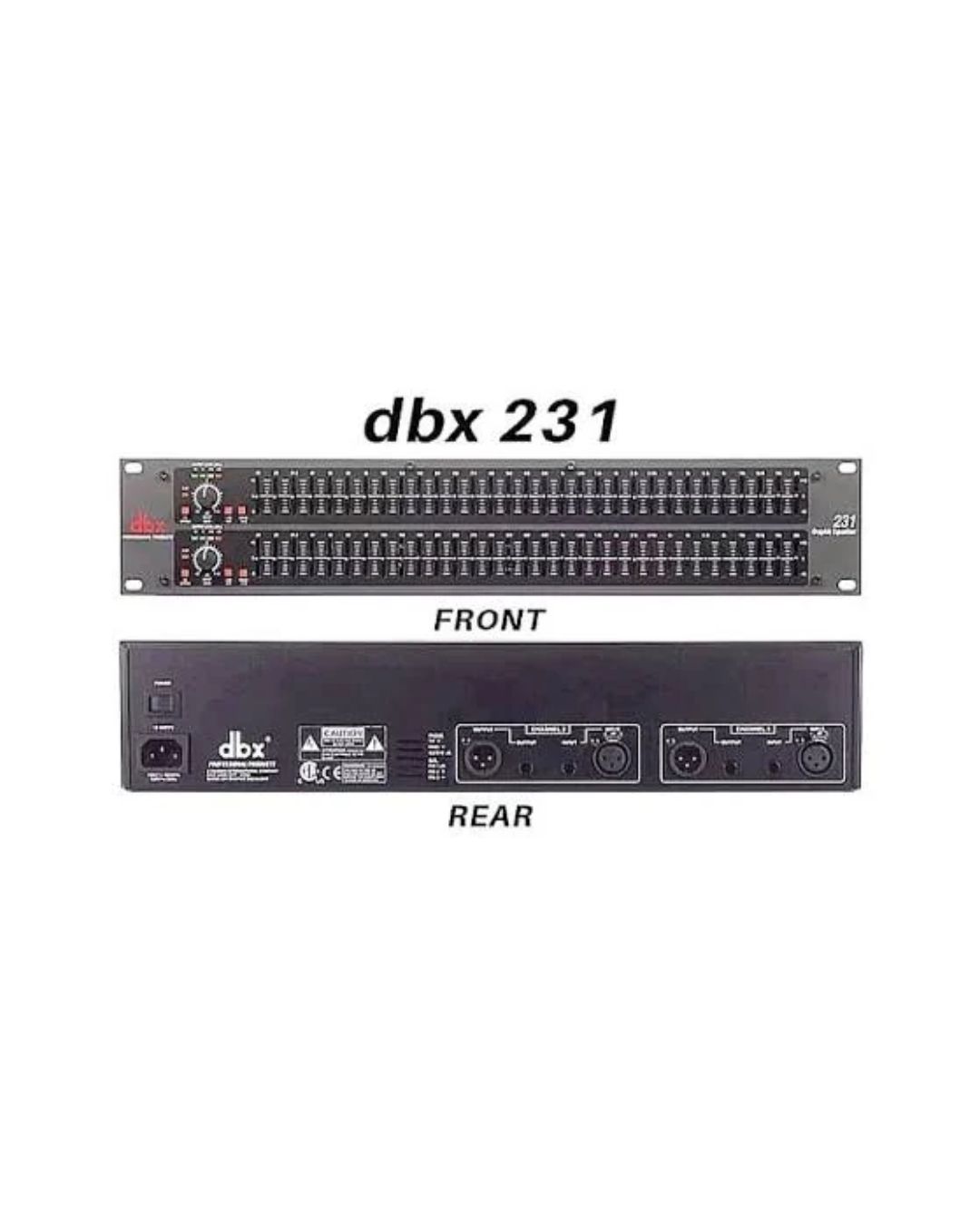
| Input Connectors | Balanced XLR and 1/4″ TRS Jacks |
| Output Connectors | Balanced XLR and 1/4″ TRS Jacks |
| Input Impedance | 40 kΩ Balanced / 20 kΩ Unbalanced |
| Output Impedance | 100 Ω Balanced / 50 Ω Unbalanced |
| Maximum Input / Output Level | +21 dBu (Balanced / Unbalanced) |
| Low-Cut Filter | Switchable High-Pass Filter (40 Hz / 50 Hz) |
Ideal Uses
Churches and Places of Worship: Tailor sanctuary acoustics, enhance speech intelligibility, and prevent microphone feedback during choir and sermon delivery.
Live Bands and Concert PA Systems: Precision front-of-house and monitor mix equalization for venue performance stages across Kenya.
Schools, Auditoriums, and Event Halls: Clean up low-frequency thumps and maintain clear voice reproduction for public address systems.
Recording and Production Studios: Shape individual instrument tracks, vocal buses, or hardware mix channels prior to final amplification.
Compatibility and What’s Included
| Category | Details |
| System Integration | DBX 231/231SUB 2 Series Graphic Equalizer Connects to sound mixing consoles, speaker management processors, and power amplifiers using standard balanced XLR or 1/4″ TRS audio cables. |
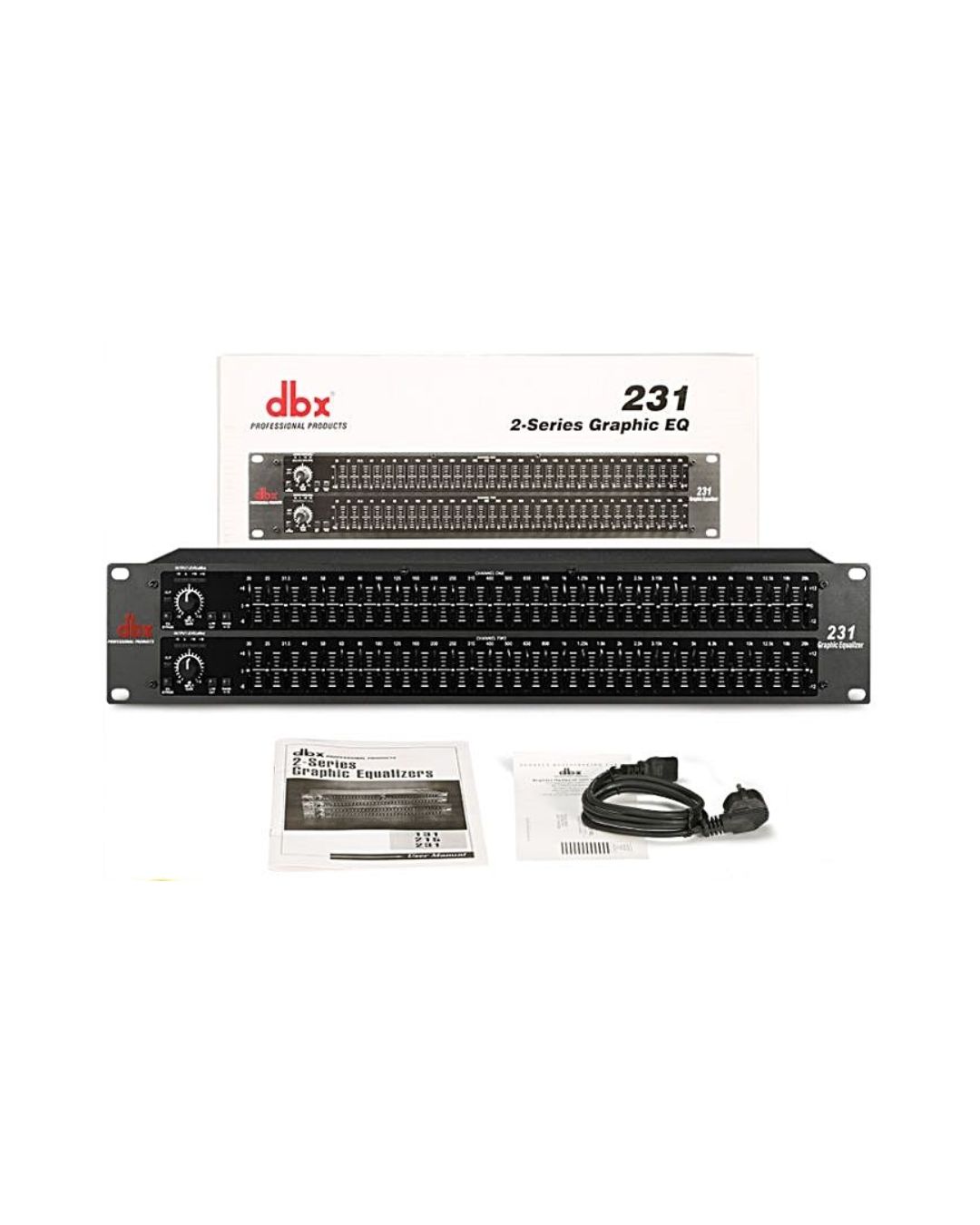
| What’s Included | DBX 231/231SUB Graphic Equalizer Unit, AC Mains Power Cable, User Manual. |
Frequently Asked Questions
What does constant-Q mean on the DBX 231/231SUB 2 Series Graphic Equalizer?
Constant-Q ensures that the bandwidth of each 1/3-octave frequency filter remains consistent regardless of whether you apply a small or large boost/cut, keeping your EQ adjustments precise without affecting surrounding frequencies.
Should I choose the ±6 dB or ±12 dB boost/cut setting?
Use the ±6 dB range for subtle, transparent tonal shaping in studio and broadcast environments, and switch to ±12 dB for broader room corrections or feedback notch filtering during live performances.
How does the low-cut filter help my audio system?
Activating the low-cut filter rolls off sub-audible frequencies below 40 Hz or 50 Hz, freeing up amplifier headroom and protecting woofer drivers from mechanical over-excursion caused by stage vibrations or wind noise.
Reviews
There are no reviews yet.